The Witching Hour Workshop
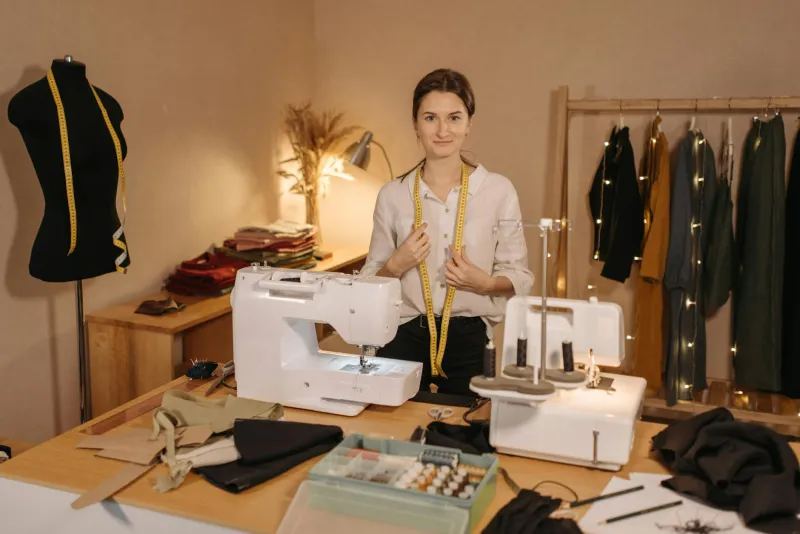
In a converted Victorian terrace in Brighton, Sarah Chen's sewing machine purrs to life at precisely 11:47 PM. The rest of the world has surrendered to sleep, but for Sarah and countless other British makers, this is when the real magic begins. "There's something profoundly different about creating when the veil between worlds feels thinnest," she explains, threading midnight-blue silk through her vintage Singer. "The garments I make at 2 AM have a soul that my daytime pieces simply don't possess."
Sarah is part of a growing underground community of nocturnal needleworkers scattered across the UK, from Edinburgh's cobbled closes to Cornwall's windswept moors. They gather not in physical spaces, but in the shared silence of the small hours, connected by an Instagram hashtag (#MidnightMakers) and a philosophy that clothing created in solitude carries intention like thread carries colour.
The Science of Solitude
Dr. Emma Hartwell, a textile anthropologist at Central Saint Martins, has been studying this phenomenon. "What we're witnessing is a return to the sacred act of making," she observes. "When you remove the distractions of daytime life—the emails, the traffic, the general hum of human activity—you create space for a deeper connection between maker and material."
The nocturnal makers speak of entering a trance-like state where time dissolves. Fiona MacLeod, who runs a bespoke tailoring studio from her Isle of Skye cottage, describes it as "conversing with the fabric." She exclusively works on her most precious commissions between midnight and 4 AM, when the only sounds are the distant crash of waves and the whisper of her scissors through Welsh wool.
"I can feel the garment telling me what it wants to become," Fiona explains. "During the day, I'm imposing my will on the fabric. At night, we collaborate."
Midnight Materials and Moon-Blessed Techniques
The materials favoured by these nocturnal artisans reflect their mystical approach. Natural fibres reign supreme—raw silk that catches candlelight like captured moonbeams, hand-dyed indigo cotton that seems to hold the depth of midnight sky, and vintage linens that carry the whispered stories of their previous lives.
Jamie Rodriguez, a pattern maker from Manchester's Northern Quarter, swears by what he calls "shadow stitching"—a technique he developed during his late-night sessions. "I use minimal lighting, just enough to see the seam line," he explains. "It forces you to rely on touch and intuition. The stitches have an organic quality that's impossible to achieve under harsh studio lights."
Many midnight makers incorporate ritual elements into their practice. Burning specific incense, playing particular playlists, or working only during certain moon phases. Luna Thompson, whose ethereal evening wear has gained a cult following among London's creative elite, begins each nocturnal session by "blessing the workspace" with sage smoke and setting an intention for the piece she's creating.
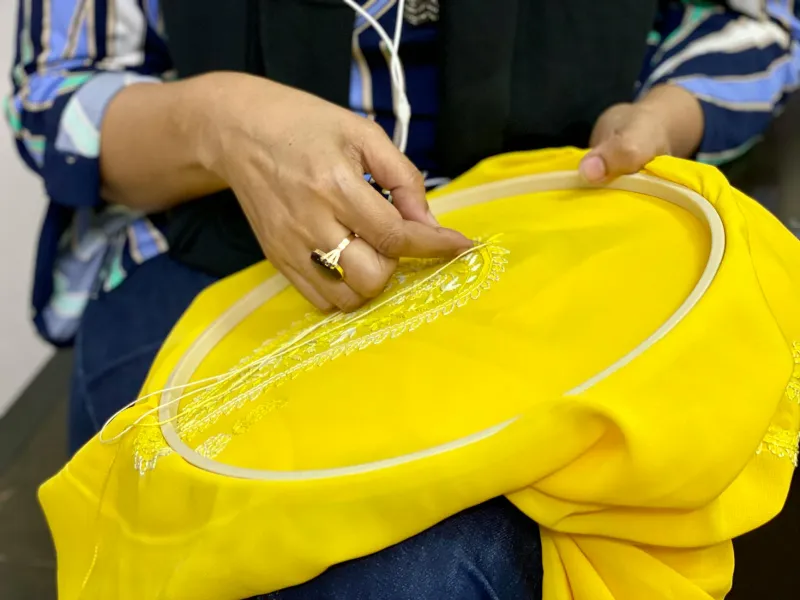
"I'm not just making a dress," Luna explains as she hand-embroiders constellation patterns onto midnight velvet. "I'm weaving protection, confidence, transformation—whatever the wearer needs—into every stitch."
The Underground Network
This community operates largely in shadows, sharing progress photos tagged with cryptic captions and trading techniques through private Discord channels. They gather for rare "Midnight Markets" in unconventional venues—abandoned warehouses in Birmingham, ancient churches in York, even virtual reality spaces where makers from across the UK can "meet" while remaining in their individual creative sanctuaries.
The pieces they create reflect their otherworldly creation process. Garments with hidden pockets for crystals or herbs, seams that catch light in unexpected ways, and finishing touches that seem to shimmer with their own inner glow. These aren't clothes in the conventional sense—they're talismans, wearable art pieces imbued with the quiet magic of their midnight birth.
The Psychology of Night Creation
Dr. Marcus Webb, who studies circadian rhythms and creativity at Oxford, offers a scientific perspective on this phenomenon. "The brain operates differently during night hours," he explains. "Reduced cortisol levels and the natural production of melatonin can enhance creative thinking and promote a state of flow that's difficult to achieve during peak daylight hours."
For many midnight makers, this practice emerged from necessity—full-time jobs and family commitments pushed their creative pursuits into the margins of the day. But what began as practical scheduling has evolved into something far more profound.
Wearing the Witching Hour
The garments emerging from these nocturnal workshops are finding their way into the wardrobes of those who understand their unique provenance. Boutique buyers seek out these pieces specifically for their "energy," and wearers report feeling different when dressed in midnight-made clothing.
"There's an armour-like quality to these pieces," explains Arabella St. James, who owns three Luna Thompson originals. "When I wear my midnight blazer to important meetings, I feel like I'm carrying the quiet confidence of those 2 AM hours with me into the chaos of the day."
The Future of Nocturnal Fashion
As this movement grows, it's challenging conventional notions of fashion production. In an industry obsessed with speed and efficiency, the midnight makers advocate for slowness, intention, and the irreplaceable value of human touch guided by intuition rather than artificial light.
Sarah Chen, still stitching as dawn approaches Brighton's horizon, sees this as fashion's return to its mystical roots. "We're remembering that clothing was once sacred," she says, holding up a completed jacket that seems to shimmer with captured starlight. "Every thread placed with intention, every seam sewn with purpose. This isn't just fashion—it's modern alchemy."
In a world increasingly dominated by fast fashion and mass production, these nocturnal needleworkers are preserving something precious: the belief that garments crafted in solitude and silence carry magic that no factory line can replicate. They're proving that sometimes, the most extraordinary fashion emerges not in the bright lights of design studios, but in the hushed hours when the world sleeps and dreams take thread.