The Sacred Return to the Loom
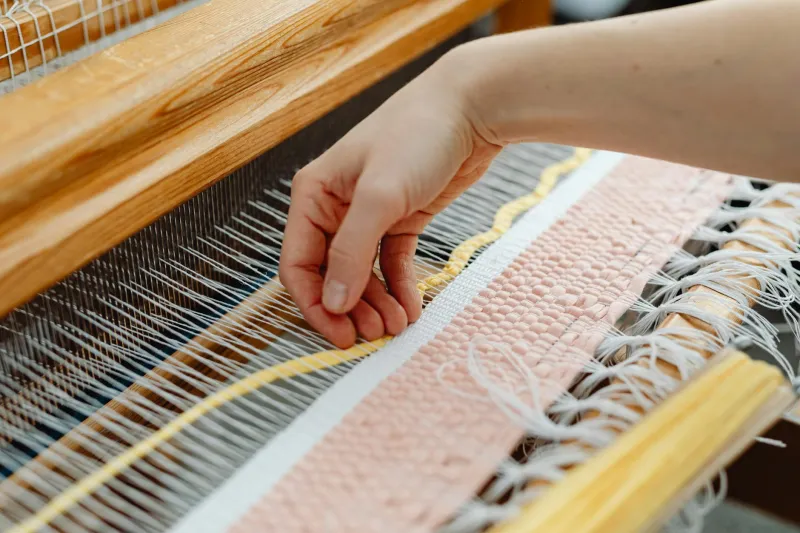
Something extraordinary is happening in Britain's textile landscape. While fast fashion churns out disposable garments by the million, a quiet revolution is taking place in converted barns, restored mills, and home studios across our islands. Here, a new generation of textile artists is breathing life back into weaving traditions that stretch back centuries, creating pieces that carry within their very fibres the myths, legends, and cultural DNA of our ancestors.
These aren't merely craftspeople—they're cultural custodians, story-weavers, and modern-day alchemists transforming ancient wisdom into contemporary wearable art. From the windswept Shetland Isles to the valleys of Wales, from Highland bothies to Cornish workshops, Britain's textile renaissance is redefining what it means to dress with intention and meaning.
Decoding the Language of Thread
Every traditional British textile technique carries within it a coded language of symbols, patterns, and meanings that have been passed down through generations of makers. The geometric diamonds of Fair Isle knitting weren't merely decorative—they represented protection, prosperity, and connection to the natural world. Welsh tapestry patterns encoded stories of local landscapes, family histories, and seasonal cycles. Harris Tweed captured the very essence of Hebridean moors in its earthy palette and robust weave.
Today's textile artists understand this symbolic vocabulary intimately. They're not simply reproducing old patterns but reinterpreting them for contemporary life, creating pieces that speak both to our heritage and our present moment. A modern Fair Isle jumper might incorporate traditional motifs whilst adding subtle references to climate change or digital connectivity. A contemporary Welsh blanket could weave together ancient Celtic knots with contemporary abstract forms.
Take Emma MacLeod, working from her studio in the Scottish Borders, who creates scarves that map ancient pilgrimage routes through their warp and weft. Or consider James Patterson in Yorkshire, whose tapestries translate local folklore into abstract textile narratives that wouldn't look out of place in a contemporary gallery yet carry the soul of centuries-old storytelling traditions.
The Makers Behind the Magic
What drives someone to dedicate their life to reviving a craft that machines can replicate in minutes? The answer lies in understanding that these artists aren't simply making textiles—they're preserving cultural memory, creating heirlooms, and offering an antidote to our increasingly disconnected world.
Many of these contemporary weavers came to their craft through circuitous routes. Some are refugees from corporate careers who found solace in the meditative rhythm of the loom. Others are university-trained fine artists who discovered that textile offered a more direct connection to tradition and community. What unites them is a shared belief that handmade objects carry an energy, a story, and a soul that mass-produced items simply cannot match.
These makers often work with locally sourced materials—wool from farms they know personally, dyes extracted from plants foraged from nearby hedgerows, patterns inspired by local architecture or landscape features. This hyperlocal approach creates textiles that are not just made in Britain but are fundamentally of Britain, carrying within their fibres the essence of specific places and communities.
Investing in Wearable Heritage
For those seeking to incorporate these meaningful pieces into their wardrobes, the journey begins with understanding that purchasing handwoven textiles is fundamentally different from buying conventional fashion. You're not simply acquiring a garment—you're becoming the next custodian of a piece of cultural heritage, investing in the continuation of ancient traditions, and supporting makers who have chosen craft over commerce.
The price point reflects this deeper value. A handwoven scarf might cost ten times more than its high-street equivalent, but it represents hundreds of hours of skilled labour, years of training, and centuries of accumulated knowledge. More importantly, it's designed to last not just seasons but decades, improving with age and wear rather than deteriorating.
When seeking out these special pieces, look beyond conventional retail channels. Many of the most interesting textile artists sell directly from their studios, at craft fairs, or through small independent galleries. Social media has become a powerful tool for discovering makers—Instagram and Twitter are treasure troves of contemporary weavers sharing their work and process.
The Ritual of Wearing Stories
When you wrap yourself in a handwoven textile, you're participating in an ancient ritual of protection, identity, and connection. The Celtic cloak, the Highland plaid, the Fair Isle gansey—these weren't just clothing but talismans, carrying within their patterns the hopes, beliefs, and identity of their wearers.
Today's handwoven pieces offer the same opportunity for meaningful dressing. A scarf woven with traditional Scottish motifs becomes a daily reminder of heritage and landscape. A bag created using ancient Welsh techniques connects you to generations of makers who used the same methods to create functional beauty.
These pieces also age beautifully, developing patina and character that tells the story of their wearing. Unlike mass-produced items that show wear as deterioration, handwoven textiles become more beautiful with time, their fibres softening, their colours deepening, their stories enriching.
Weaving the Future
As we face an uncertain future marked by environmental crisis and cultural homogenisation, the work of Britain's contemporary textile artists offers both hope and direction. They're proving that ancient wisdom and modern innovation can coexist, that slow making can compete with fast fashion, and that objects created with intention and skill carry a power that transcends mere utility.
By supporting these makers, wearing their creations, and understanding the stories encoded within their patterns, we become part of a larger narrative—one that values craft over commerce, story over style, and meaning over trend. In a world increasingly dominated by the disposable and the digital, these woven treasures offer something irreplaceable: a tangible connection to our past and a sustainable path to our future.
The loom may be ancient, but in the hands of Britain's contemporary textile artists, it's weaving tomorrow's heirlooms today.