The Call of the Cloth
It begins with a whisper—the rustle of silk calling from across a crowded market stall, the way light catches on a bolt of wool that shouldn't, by all logical reasoning, have anything to do with your life or wardrobe. Yet something primal awakens, and before you know it, you're walking away with three metres of fabric you have absolutely no plan for, feeling simultaneously guilty and absolutely, inexplicably certain that you've just rescued something precious.
If this sounds familiar, welcome to Britain's most secretive style subculture: the fabric hoarders. They're the people who can't walk past a textile merchant without investigating, who have entire rooms dedicated to "someday" fabrics, who speak about cloth the way wine enthusiasts discuss vintages. They're also, quite possibly, the creators of the most genuinely personal, extraordinary clothing in the country.
The Anatomy of Obsession
Clare Pemberton's Victorian terraced house in Brighton looks perfectly normal from the outside. Inside, however, is a textile wonderland that would make Liberty's weep with envy. Every spare room, every cupboard, every available surface hosts carefully organised collections of fabric purchased over twenty years of what she laughingly calls "completely irrational shopping behaviour."
"I tried to count once," she admits, running her hands through a collection of Japanese cottons that takes up an entire wardrobe. "I stopped at four hundred pieces. That was just the upstairs bedroom." She pulls out a length of hand-woven wool she bought from a mill in the Scottish Highlands five years ago. "I still don't know what this wants to become, but I couldn't leave it there. It was too beautiful to abandon."
This isn't shopping in any conventional sense. It's more akin to rescue work, driven by an almost mystical belief that certain fabrics choose their owners rather than the other way around.
The Sacred Hunt
Britain's fabric obsessives have developed an intricate geography of their obsession. They speak reverently of the remnant bins at MacCulloch & Wallis in London's Dering Street, where discontinued designer fabrics find their way to people who understand their worth. They make pilgrimages to the monthly textile fair at Newark, where dealers spread vintage kimono silks and deadstock woolens like tarot cards telling the future of someone's wardrobe.
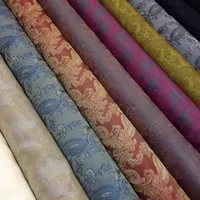 Photo: MacCulloch & Wallis, via d3hv0iapr9wffe.cloudfront.net
Then there are the mill shops scattered across Yorkshire and Scotland, where industrial accidents become individual treasures. "There's this place near Hawick," whispers textile designer Sarah Mitchell, as if revealing state secrets, "where they sell the ends of runs from luxury fashion houses. You might find two metres of the same wool that Hermès used for their last collection, selling for the price of high street fabric."
The hunt itself becomes addictive. These fabric collectors develop an almost supernatural ability to spot quality from across a crowded market. They can identify a silk-wool blend by touch, date a Liberty print by its colour saturation, and assess the thread count of linen with the confidence of archaeologists dating pottery shards.
The Intuitive Wardrobe
What's remarkable about this community isn't their purchasing habits—it's what they create with their hoarded treasures. Freed from the tyranny of shopping for specific projects, they develop an entirely different relationship with their wardrobes. Instead of deciding "I need a black dress" and then finding fabric, they let their collections speak to them, allowing garments to emerge organically from the dialogue between inspiration and material.
"My best pieces come from fabric I've owned for years," explains knitwear designer Tom Chen, whose London studio doubles as a textile archive. "There's this cashmere blend I bought in Edinburgh in 2018. I had no plan for it, but I kept it visible, handled it occasionally, thought about it. Last winter, I suddenly knew exactly what it wanted to be—a oversized cardigan with these specific proportions I'd never considered before. The finished piece is unlike anything I would have designed if I'd started with a concept rather than the cloth."
This process creates clothing that feels inevitable rather than designed, garments that seem to have grown naturally from the fabric rather than being imposed upon it. The results are often extraordinary—pieces that have a rightness, a harmony between material and form that's rarely achieved through conventional design processes.
The Philosophy of Abundance
Critics might dismiss fabric hoarding as wasteful overconsumption, but spend time with these collectors and a different picture emerges. Their abundance isn't careless—it's curatorial. They're preserving textile traditions that might otherwise disappear, rescuing beautiful cloth from industrial waste streams, and maintaining a kind of material memory bank of British textile heritage.
"I have fabrics in my collection that represent mills that closed decades ago," explains vintage textile dealer Margaret Thornfield, whose Yorkshire warehouse houses one of the country's most significant private textile collections. "These aren't just pretty things—they're documents of British industrial history, examples of techniques that might otherwise be lost."
Many hoarders become informal educators, sharing their knowledge with younger makers, offering rare fabrics to emerging designers who couldn't otherwise access such materials. Their collections become resources for the broader creative community, libraries of possibility for anyone willing to approach fabric-making with sufficient reverence and imagination.
The Mystical Mathematics of Yardage
There's something almost spiritual about the way serious fabric collectors discuss their acquisitions. They speak of fabrics "calling to them," of knowing instinctively how much yardage to buy even when they have no specific project in mind. This intuitive purchasing often proves remarkably accurate—years later, they discover they bought exactly the right amount for the garment that eventually emerges.
"It's like the fabric knows what it wants to become," muses costume designer Priya Sharma, whose collection spans everything from 18th-century brocades to contemporary technical fabrics. "I bought four and a half metres of this incredible shot silk in Brick Lane three years ago. No reason, just felt right. Last month, I finally made it into a coat, and I had exactly enough fabric—down to the final few centimetres for the buttons."
 Photo: Brick Lane, via essentialldn.com
The Slow Fashion Revolution
In an era of fast fashion and instant gratification, Britain's fabric hoarders represent something radical: the willingness to wait, to let relationships with materials develop over time, to trust that beauty will find its purpose eventually. Their approach challenges every assumption about efficient consumption and rational shopping.
Yet their results speak for themselves. These collectors consistently produce clothing that's more personal, more beautiful, and more enduring than anything available in conventional retail. They prove that the best fashion doesn't come from following trends but from developing deep, intuitive relationships with materials themselves.
The Future of the Hoard
As more people become disillusioned with fast fashion and hungry for authentic personal style, the fabric hoarding community is quietly growing. Young makers are discovering the joy of building relationships with cloth, of letting their wardrobes develop organically rather than being assembled from seasonal shopping trips.
Social media has connected previously isolated fabric obsessives, creating communities where people share their latest acquisitions, seek advice on mysterious textiles, and celebrate the moment when a long-hoarded fabric finally reveals its destiny.
"We're not hoarders," insists Clare, stroking a piece of vintage Liberty wool that's been waiting seven years for its moment. "We're optimists. Every piece of fabric in here represents a future possibility, a garment that will someday exist and be perfect because it grew from genuine love rather than temporary need."
In a world increasingly dominated by artificial intelligence and virtual experiences, these fabric whisperers are maintaining something profoundly human: the ability to fall in love with physical materials, to trust intuition over logic, and to believe that beauty, given time and attention, will always find its way to purpose.
They're not just collecting fabric—they're preserving the possibility of magic in an increasingly mechanical world. And judging by the extraordinary garments that emerge from their hoarded collections, that magic is very real indeed.