The Thread That Binds Us to the Land
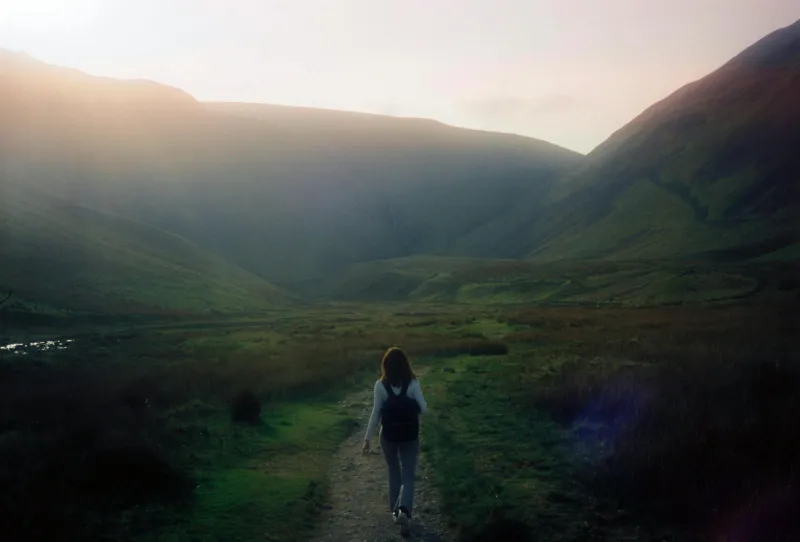
Something magical happens when you witness a walker on the Pennine Way carefully unpicking a thread from their torn jacket, not to discard it, but to preserve it as a memento of Bleaklow's unforgiving terrain. This isn't carelessness—it's cartography of the most intimate kind.
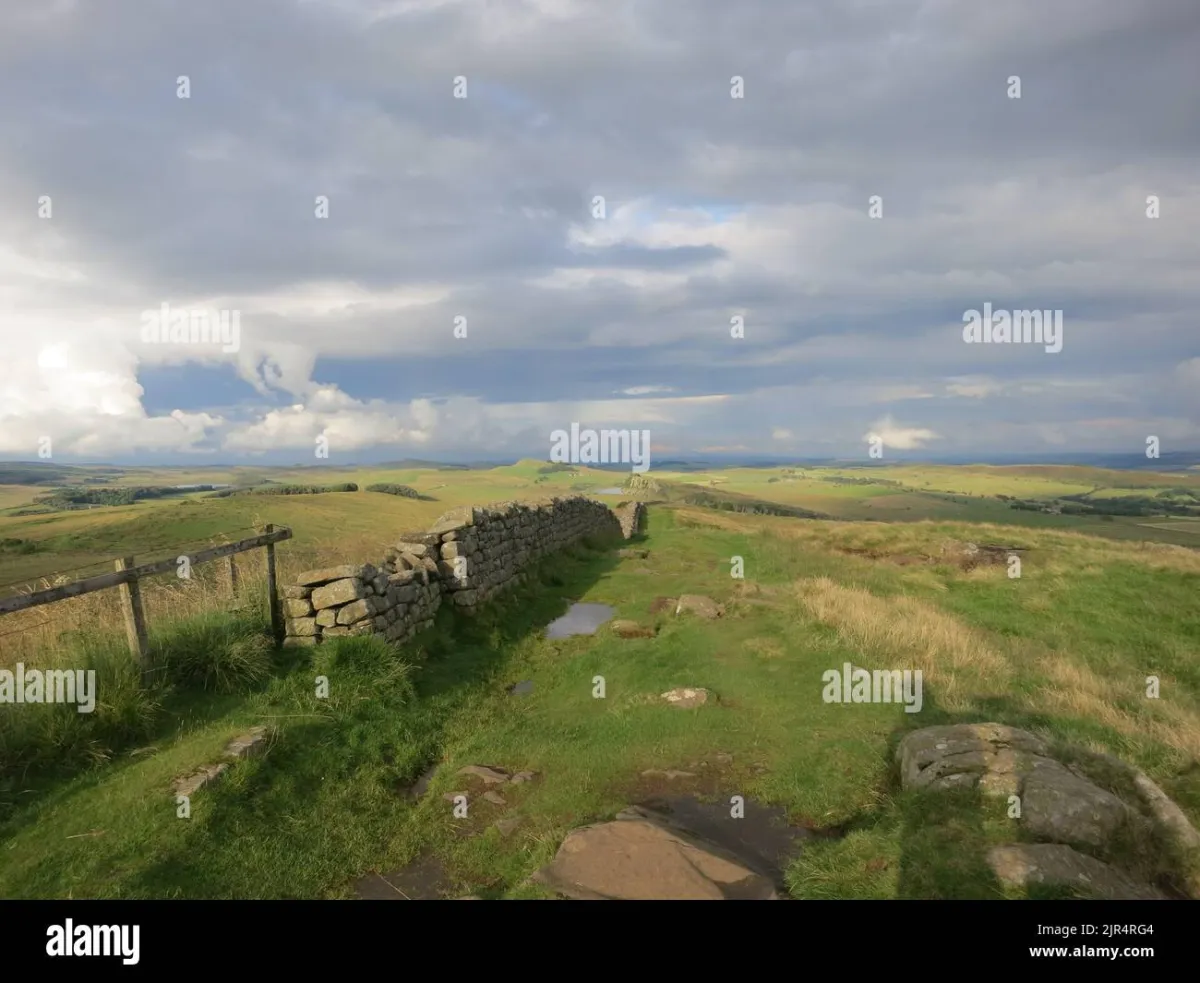 Photo: Pennine Way, via c8.alamy.com
Across Britain's network of long-distance paths, a quiet revolution is taking place. Walkers are transforming their journeys into wearable atlases, collecting fragments of fabric, natural dyes, and textile treasures that map their pilgrimages through our ancient landscape. It's fashion archaeology, where each patch, each carefully chosen button, each naturally stained hem tells the story of a specific mile, a particular morning, a moment when Britain revealed another of her secrets.
From Hadrian's Wall to Hemlines
Consider Sarah McKenzie, who spent eighteen months walking the entirety of Britain's National Trail network. Her jacket—originally a simple waxed cotton affair from a Hebridean mill—now resembles a textile patchwork of her journey. A square of Harris Tweed from the Outer Hebrides sits alongside a piece of Welsh wool dyed with bilberries she foraged near Snowdonia. Each addition was sewn by hand in youth hostels and bothies, creating what she calls her "geography coat."
"People think I'm mad," Sarah laughs, fingering a small pocket made from fabric she bought at a market in Hay-on-Wye. "But this jacket knows more about Britain than most people ever will. It's been soaked by Highland rain, bleached by Cornish sun, and mended with thread bought from a haberdashery that's been serving walkers on the Cotswold Way for sixty years."
This isn't mere sentimentality. These garments become functional maps, each textile modification marking not just a location but a transformation—both of the walker and the walked.
The Alchemy of Natural Dyes
Perhaps nowhere is this textile pilgrimage more evident than in the growing practice of natural dyeing along Britain's paths. Walkers are learning to read the landscape through its colour-giving properties: elderberries for deep purples along the Thames Path, bracken for golds in the Scottish Highlands, madder root for reds in the chalk downs of the South Downs Way.
James Hartwell, a textile artist who completed the South West Coast Path over two summers, carried a small kit of mordants and a collection of white silk scarves. "By the time I reached Land's End," he explains, "I had forty-seven different shades of Britain in my pack. Each one captured not just a place, but a season, a weather condition, even a time of day."
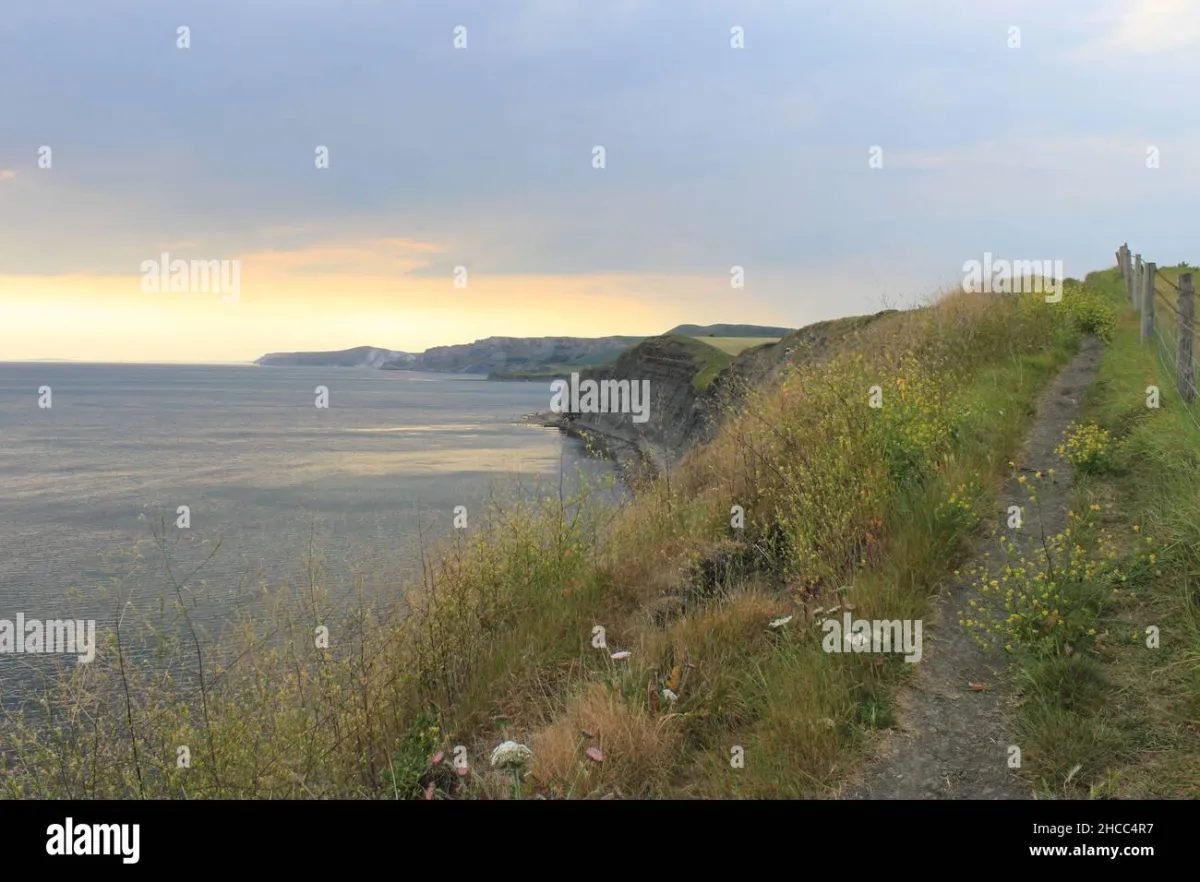 Photo: South West Coast Path, via c8.alamy.com
His resulting installation—scarves hung in the order of his walk—reads like a colour diary of Britain's southwestern edge. The pale yellow of gorse from Devon's moors gives way to the deep indigo of woad found growing wild near Tintagel, followed by the russet browns of oak galls gathered in Cornish valleys.
Sacred Stitching in Secular Spaces
What strikes you most about these textile pilgrims is their reverence for the act of creation itself. In an age of fast fashion and disposable garments, they're returning to something profoundly ancient: the idea that clothing should be earned, that it should tell stories, that it should connect us to place in ways that transcend mere practicality.
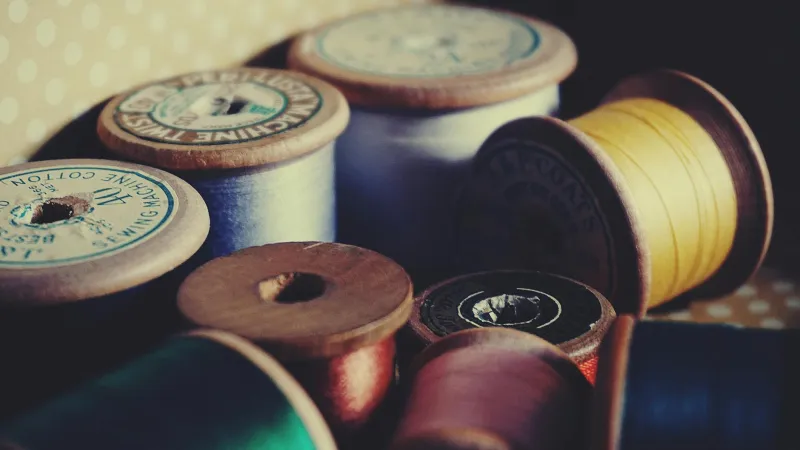
The evening ritual in hostels and campsites has become almost ceremonial. Walkers gather with their mending kits, sharing not just needles and thread but stories of the day's journey. A rip becomes an opportunity for decoration. A stain becomes a badge of honour. A worn heel becomes the perfect place to add a patch of local tweed.
The Boutique Connection
This movement isn't happening in isolation. Small British textile businesses are beginning to cater specifically to this community. Independent dyers along popular routes offer "walker's kits"—small packets of locally sourced natural dyes and mordants designed for portable use. Haberdasheries in trail towns stock threads in colours that echo local landscapes. Even some outdoor gear companies are beginning to understand that their customers want clothing that can evolve, that can become more beautiful with wear rather than simply wearing out.
Beyond Function, Into Poetry
What these walking textile artists understand is that Britain's landscape has always been about layers—geological, historical, cultural. Their garments become another layer in this palimpsest, a way of writing themselves into the story of place.
When you see a walker on the Cleveland Way with sleeves that shift from the grey-green of North Sea foam to the purple-brown of Yorkshire heather, you're witnessing something profound: fashion as pilgrimage, clothing as cartography, style as a form of sacred geography.
These aren't just garments—they're love letters to Britain, written in thread and worn with pride. They prove that the most extraordinary fashion doesn't come from runways but from the simple act of walking with intention, of allowing the landscape to dress you as much as you dress for it.
In a world increasingly disconnected from place, these textile pilgrims are literally wearing their connection to Britain's wild spaces. And in doing so, they're creating a new kind of luxury—not one measured in price per yard, but in miles per memory, stories per stitch, magic per mile walked.