Walk down any British high street today, and you'll witness a fascinating paradox. Whilst the familiar chain stores continue to churn out identical garments by the thousand, a growing number of style-conscious shoppers are quietly staging a revolution—one carefully curated purchase at a time. They're turning their backs on the homogeneous offerings of mass retail, instead seeking out independent boutiques, artisan creators, and small-scale designers who offer something infinitely more precious than convenience: authenticity.
The Great British Style Awakening
This isn't merely a trend—it's a fundamental shift in how we think about clothing, identity, and consumption. After decades of being told that more is better, faster is essential, and cheaper is always preferable, British shoppers are finally asking different questions. What story does this garment tell? Who made it, and under what conditions? Will I still love wearing this piece in five years' time?
The answers they're finding in chain stores are increasingly unsatisfactory. Mass-produced fashion, by its very nature, cannot offer the distinctiveness, craftsmanship, or emotional connection that many shoppers now crave. It's designed for the mythical 'average' consumer—a person who, in reality, doesn't exist.
"I realised I was dressing like everyone else because I was shopping in the same places as everyone else," explains Sarah Chen, a marketing executive from Manchester who made the switch to boutique shopping two years ago. "When you buy from independent designers and curated collections, you're not just purchasing clothes—you're investing in pieces that reflect who you actually are, not who some corporate algorithm thinks you should be."
Beyond the Ethical Imperative
Whilst sustainability concerns certainly play a role in this shift—with many shoppers increasingly aware of fashion's environmental impact—the boutique movement runs much deeper than environmental consciousness alone. It's about reclaiming fashion as a form of self-expression rather than mindless consumption.
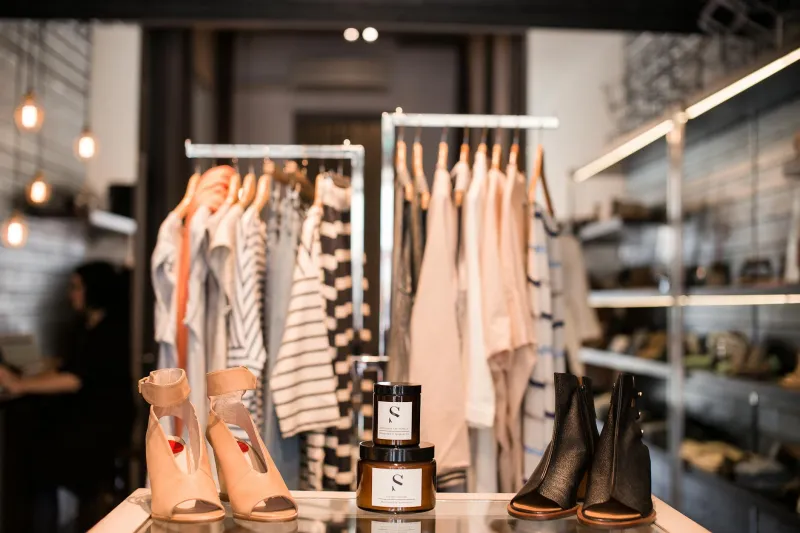
Consider the emotional experience of shopping. In a chain store, you're one of hundreds of customers that day, rifling through racks of identical items that have been focus-grouped to appeal to the broadest possible demographic. Compare this to the experience of discovering a small boutique where every piece has been personally selected by someone with genuine passion for fashion, where you might learn the story behind a particular designer or the inspiration for a specific collection.
"The relationship between customer and retailer is completely different," notes fashion consultant Emma Richardson, who has observed this shift across her client base. "Boutique shopping is inherently more personal. You're not just buying a product; you're connecting with a curator's vision, supporting an artist's creativity, and often becoming part of a community of like-minded individuals who value quality and originality."
The Psychology of Distinctive Dressing
There's something profoundly liberating about knowing that your outfit is unlikely to be replicated by strangers on the street. When you invest in pieces from independent designers or carefully curated boutique collections, you're purchasing exclusivity—not the manufactured scarcity of limited editions and artificial drops, but genuine rarity born from small-scale production and artistic vision.
This exclusivity serves a deeper psychological need. In an increasingly homogenised world, distinctive fashion becomes a way of asserting individuality and personal taste. It's a visual language that communicates sophistication, creativity, and independence from mainstream trends.
"Wearing something unique gives you confidence in a way that mass-produced clothing simply can't," observes Dr. Jennifer Walsh, a fashion psychologist at Central Saint Martins. "When you know your outfit tells a story that's distinctly yours, it affects how you move through the world. You carry yourself differently because you're wearing something that truly reflects your personality rather than following someone else's idea of what's fashionable."
The Economics of Emotional Investment
Perhaps counterintuitively, many boutique shoppers find that their cost-per-wear actually decreases when they invest in higher-quality, distinctive pieces. A beautifully made dress from an independent designer might cost three times as much as its high street equivalent, but if you wear it regularly for years rather than discarding it after a season, the mathematics of value shift dramatically.
More importantly, there's an emotional economics at play. When you truly love a garment—when it feels like an expression of your authentic self rather than a compromise or impulse purchase—you naturally take better care of it. You have it properly cleaned, store it carefully, and treat it as an investment rather than a disposable commodity.
"I used to buy something new every weekend because nothing in my wardrobe felt quite right," admits London-based graphic designer Tom Harrison. "Now I buy maybe four or five pieces a year, but each one is perfect for me. I spend less overall, my wardrobe is more cohesive, and I actually enjoy getting dressed in the morning."
The Curation Factor
One of the most compelling aspects of boutique shopping is the element of curation. Unlike chain stores, which stock whatever their buyers believe will sell in the largest quantities, boutiques operate more like galleries. Each piece is chosen not just for its commercial viability, but for how it fits into a broader aesthetic vision.
This curatorial approach extends beyond individual garments to encompass entire collections and seasonal stories. A skilled boutique owner doesn't just sell clothes—they create wardrobes, suggest combinations, and help customers develop their personal style in ways that mass retail simply cannot accommodate.
"The best boutiques are like having a personal stylist who really understands your lifestyle and aesthetic preferences," explains fashion journalist Rachel Morgan. "The staff genuinely care about how pieces work together, how they'll fit into your existing wardrobe, and whether they'll serve you well over time. It's a completely different relationship from the transactional nature of chain store shopping."
Supporting British Creativity
The boutique movement also represents a conscious choice to support British creativity and craftsmanship. Many independent boutiques prioritise UK-based designers and makers, meaning that each purchase directly supports the domestic creative economy rather than faceless multinational corporations.
This support extends beyond mere economics to encompass cultural value. British fashion has always been characterised by creativity, innovation, and a willingness to challenge conventions. By choosing boutique and artisan pieces, shoppers are actively participating in this tradition rather than simply consuming it.
"When you buy from a British independent designer, you're not just getting a garment—you're getting a piece of our creative heritage," argues fashion historian Dr. Patricia Smithson. "You're supporting the kind of innovation and craftsmanship that has made British fashion influential worldwide."
The Community Element
Perhaps most surprisingly, many boutique shoppers discover that their purchasing choices connect them to communities of like-minded individuals. Unlike the anonymous nature of chain store shopping, boutique customers often develop relationships with staff and other customers who share their values and aesthetic preferences.
Social media has amplified this community aspect, with boutique customers sharing styling inspiration, supporting each other's choices, and celebrating the discovery of new designers or pieces. This creates a positive feedback loop that reinforces the emotional satisfaction of boutique shopping.
Looking Forward: The Future of British Fashion Retail
As we move further into 2025, the signs suggest that this shift towards boutique and artisan shopping will only accelerate. Younger consumers, in particular, are demonstrating a preference for quality over quantity, story over convenience, and authenticity over mass appeal.
This doesn't necessarily spell doom for all chain retailers, but it does suggest that the most successful fashion businesses will need to find ways to offer the personalisation, curation, and authentic storytelling that boutiques provide naturally.
For now, though, the boutique revolution represents something beautifully simple: the rediscovery that fashion, at its best, is about more than just covering our bodies. It's about expressing our values, supporting our communities, and surrounding ourselves with beauty that has been created with care, intention, and genuine artistry.
In choosing boutique over chain store, independent over corporate, and curated over mass-produced, British shoppers aren't just changing their wardrobes—they're reclaiming fashion as a form of personal and cultural expression. And that, perhaps, is the most stylish revolution of all.