The Death of Shopping Magic
When did trying on clothes become such a soul-crushing experience? Somewhere between the fluorescent-lit changing rooms of high street chains and the algorithmic recommendations of online retailers, we lost something essential: the magic of discovery, the ritual of transformation, the sacred pause between who we were when we walked in and who we might become when we walk out.
But across Britain, a quiet revolution is brewing in the most unexpected places. Independent boutiques are rejecting the sterile efficiency of modern retail in favour of something far more profound: shopping as theatre, fitting as ritual, and the changing room as a portal to possibility.
The Alchemists of Atmosphere
In Bath's cobbled streets, Luna & Curious has transformed the simple act of trying on a dress into something approaching ceremony. Owner Celestine Webb greets each customer with herbal tea served in vintage china, whilst the changing rooms themselves feel like secret gardens – walls lined with pressed wildflowers, mirrors framed in driftwood, and lighting that shifts subtly with the time of day.
"We've forgotten that choosing what to wear is one of the most intimate decisions we make each day," Webb explains, adjusting a hanging installation of dried lavender. "Why should that process happen under harsh lights in a plastic cubicle?"
The difference is immediately palpable. Instead of the usual anxiety-inducing rush to decide quickly, customers find themselves moving slowly, thoughtfully, as if each garment deserves proper consideration. The space encourages contemplation rather than consumption, connection rather than transaction.
Candlelight Consultations
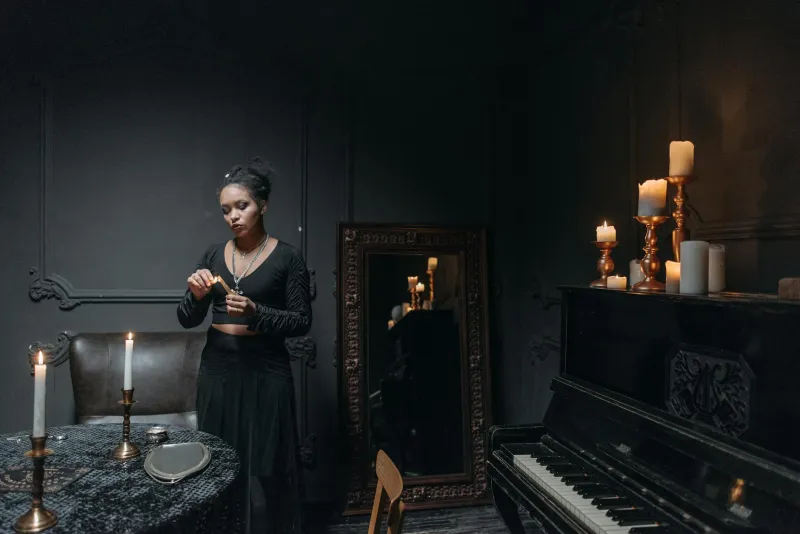
In Edinburgh's Old Town, boutique owner Isla MacPherson has taken the concept even further. At Moth & Moon, fitting appointments are conducted entirely by candlelight, with a soundtrack that changes seasonally – spring brings field recordings of dawn choruses, whilst winter sessions feature the crackle of fires and distant storm sounds.
"Artificial lighting lies," MacPherson argues, lighting another pillar candle as afternoon fades outside her medieval shop front. "Candlelight tells the truth. It shows you how fabric moves in real light, how colours shift and breathe. Most importantly, it slows you down."
The results speak for themselves. Customers report feeling more connected to the clothes they try on, more aware of how fabric feels against their skin, more conscious of their own emotional responses to different pieces. What could be dismissed as elaborate performance art actually serves a deeper purpose: it returns agency to the customer in an industry designed to overwhelm and rush.
The Sensory Revolution
This isn't just about pretty aesthetics – though the aesthetics are undeniably beautiful. It's about recognising that shopping, at its best, is a multi-sensory experience that fast fashion has systematically stripped of meaning. In Liverpool's Baltic Triangle, The Cloth House incorporates scent into every fitting session – rosemary for focus when choosing work pieces, jasmine for evening wear, eucalyptus for activewear.
"Smell triggers memory more powerfully than any other sense," explains owner Priya Sharma. "When a customer associates a particular scent with finding the perfect dress, they carry that positive memory with them. Getting dressed becomes a daily ritual of self-care rather than a chore."
Sherman's approach extends to texture and sound as well. Changing rooms feature different floor surfaces – smooth river stones for grounding, soft moss for comfort, polished wood for confidence. The psychological impact is subtle but profound: customers report feeling more embodied, more present, more connected to their own preferences and desires.
Seasonal Storytelling
Perhaps most radically, these boutiques are rejecting fashion's relentless seasonal cycle in favour of something more organic and intuitive. At Wildwood & Sage in Brighton, the entire shop transforms with the lunar calendar. New moon sessions focus on letting go of pieces that no longer serve, whilst full moon appointments celebrate abundance and possibility.
Owner Morgan Davies sees this as a return to more natural rhythms. "The fashion industry tries to convince us that we need new clothes every few weeks, but our actual relationship with clothing is much more cyclical. Some pieces call to us in winter, others in spring. Some garments need to rest in our wardrobes before we're ready to wear them."
This approach transforms shopping from impulse purchase to intentional curation. Customers learn to recognise their own patterns and preferences, to understand which pieces will serve them long-term rather than just satisfying immediate desires.
The Ritual of Reflection
What unites all these approaches is a fundamental belief that trying on clothes should be a form of meditation, not a military operation. In York's historic Shambles, The Weaving Room provides each changing room with a handwritten journal where customers can record their thoughts and feelings about different pieces.
"We've created a culture where shopping is supposed to be fast and thoughtless," observes owner Sarah Chen. "But choosing what to wear is actually one of the most creative acts we perform daily. It deserves time, space, and respect."
Reading through these journals reveals something remarkable: customers writing poetry about how a particular dress makes them feel, sketching outfit combinations, planning how they might alter or customise pieces to better suit their lifestyle. The changing room becomes a creative laboratory rather than a decision-making pressure cooker.
Beyond Transaction: Building Community
These boutiques understand something that chain stores have forgotten: shopping, at its heart, is a social act. At Bramble & Wild in Glasgow, fitting sessions often become impromptu styling workshops, with other customers offering feedback and suggestions in an atmosphere of mutual support rather than competition.
"Fast fashion teaches us that style is individual and competitive," notes owner Fiona Reid. "But historically, getting dressed was communal – women helped each other choose fabrics, shared styling knowledge, celebrated each other's beauty. We're trying to reclaim that spirit."
The result is a community of customers who see shopping not as solitary consumption but as collaborative creativity. They return not just to buy new pieces but to share styling discoveries, seek advice on caring for existing garments, and participate in the ongoing conversation about conscious consumption.
The Future of Fashion Ritual
As these boutiques demonstrate, the choice isn't between efficient retail and beautiful retail – it's between shopping as mindless consumption and shopping as mindful curation. By slowing down the process, honouring the sensory aspects of clothing, and creating space for reflection and community, they're offering something revolutionary: a return to shopping as a form of self-care rather than self-destruction.
In an industry built on making us feel inadequate so we'll buy more, these spaces dare to make us feel worthy of beauty, deserving of attention, capable of making thoughtful choices. They remind us that getting dressed is not a problem to be solved quickly but a daily opportunity to express who we are and who we're becoming.
The changing room revolution may be quiet, but it's profound. One candle, one pressed flower, one moment of unhurried consideration at a time, these boutiques are proving that another way is possible – a way that honours both the clothes and the people who wear them.